1
Rule #1Rule #1 NO #2
Solids in the toilet clog the system and take the coach out of service, so every clog event counts as one Overdrive. It stands on its own, separate from miles, hours, or rest.
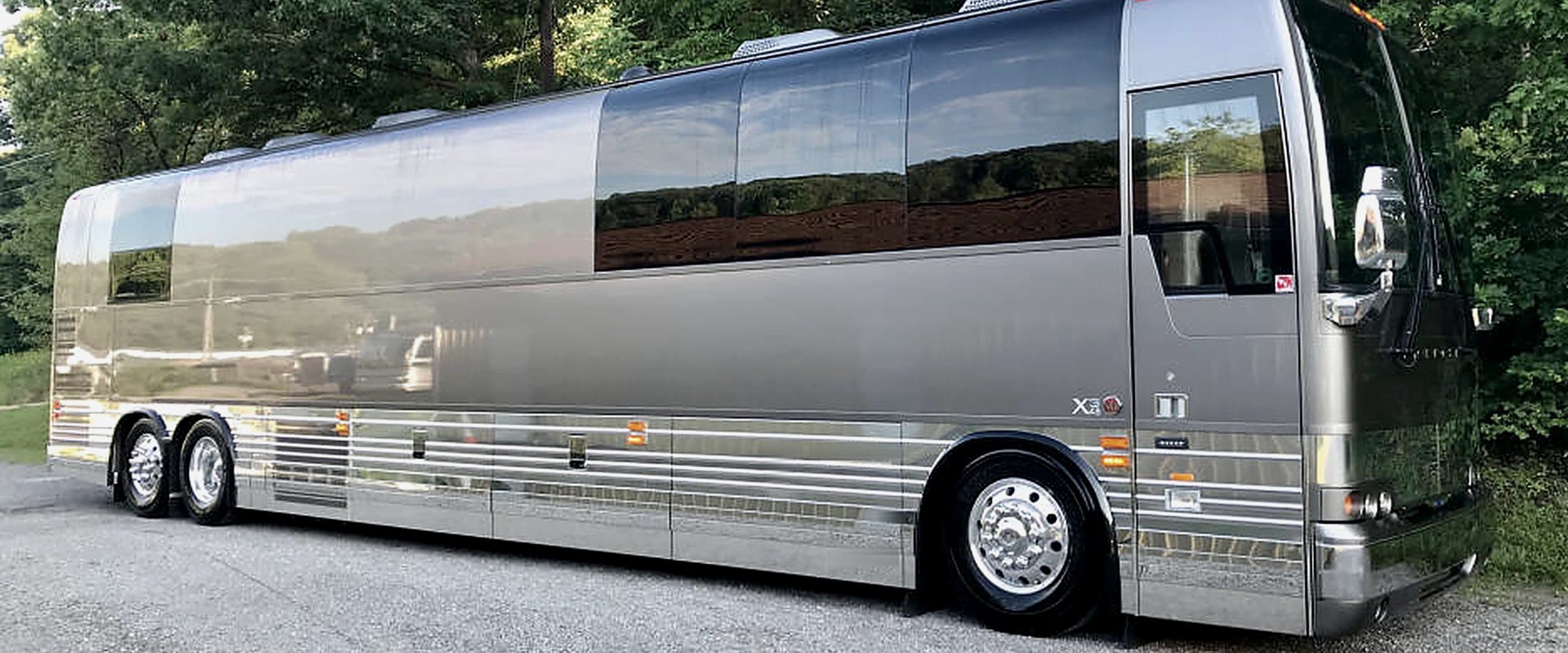
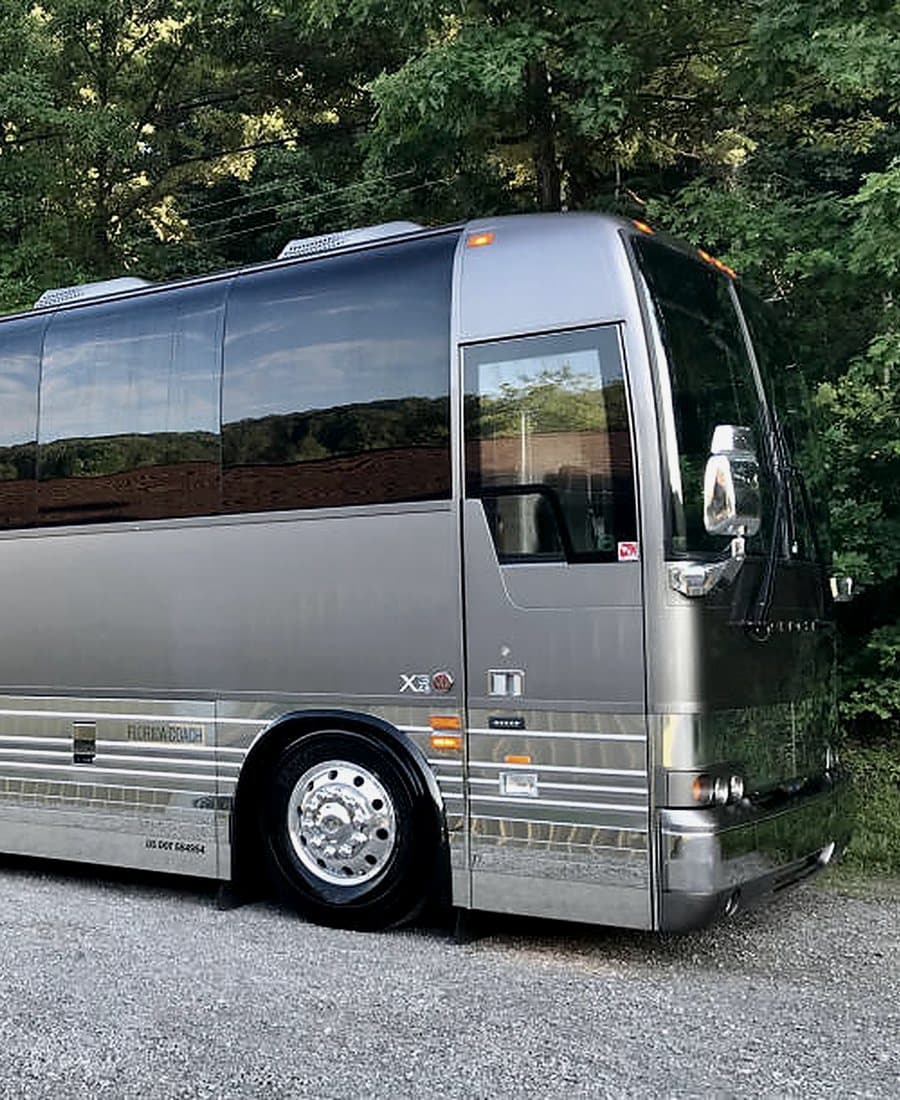
A higher safety standard for the luxury tour buses that carry famous clients. It goes past what the law requires, because the whole point is a more rested driver.
DOT, the government's trucking rules, asks whether a trip is legal. Overdrive asks whether it's the safest, most-rested way to drive. A trip can be fully legal and still run up Overdrives.
There are seven rules, and they fall into four categories.
If you are new to this, the Rules page starts with a plain-language breakdown and then counts a real day's Overdrives step by step.
Solids in the toilet clog the system and take the coach out of service, so every clog event counts as one Overdrive. It stands on its own, separate from miles, hours, or rest.
A driver needs 10 consecutive hours off in a real hotel bed, and the clock only starts when the room key is in hand and ends at lobby call. Anything short of 10 is one Overdrive, no matter how short.
The on-duty clock runs continuously from lobby call and never pauses. Reaching 10 hours is one Overdrive, 12 hours is another, and every hour after that adds one more.
Miles come off the odometer, not a maps estimate. 450 miles is one Overdrive, 600 is two, 700 is three, and the lines are exact: 449 is nothing.
When a day has both a mileage claim and the 10-hour timed claim, you keep the bigger one, never both. The 12-hour-and-up timed add-ons still stack on top of whatever mileage produced.
Overdrives are counted per driver on his own miles, own hours, and own log grid, and the co-driver takes the miles the main driver can't legally finish. Bunk time while the other driver is at the wheel counts as off-duty, but only with a bunk or the whole back lounge, and the timed claim goes to whoever drove last.
Whatever the log totals for the calendar day is what counts. Midnight doesn't split a continuous run, and a 10-hour rest resets the timed clock but not the miles.
All seven rules, with examples, key points, and how the claim logic works.
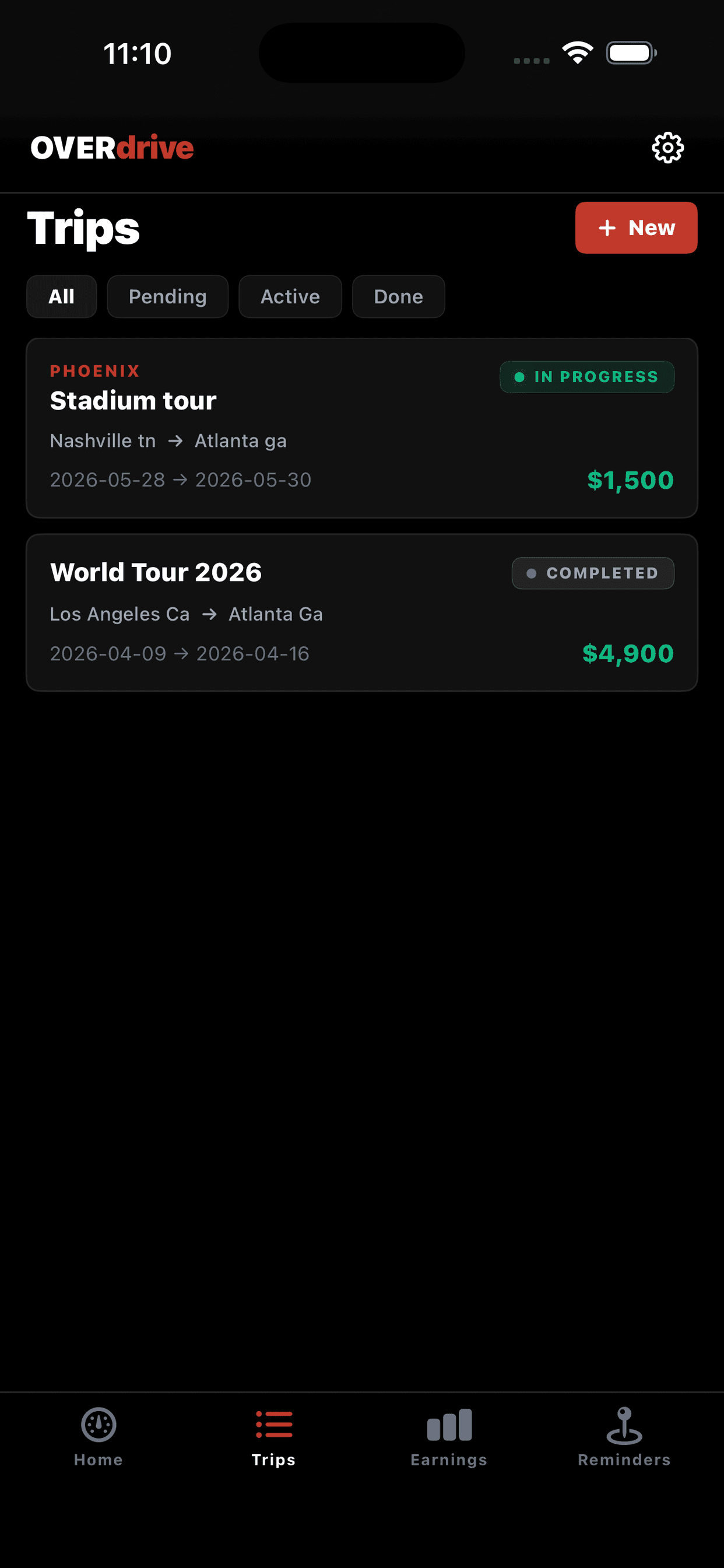
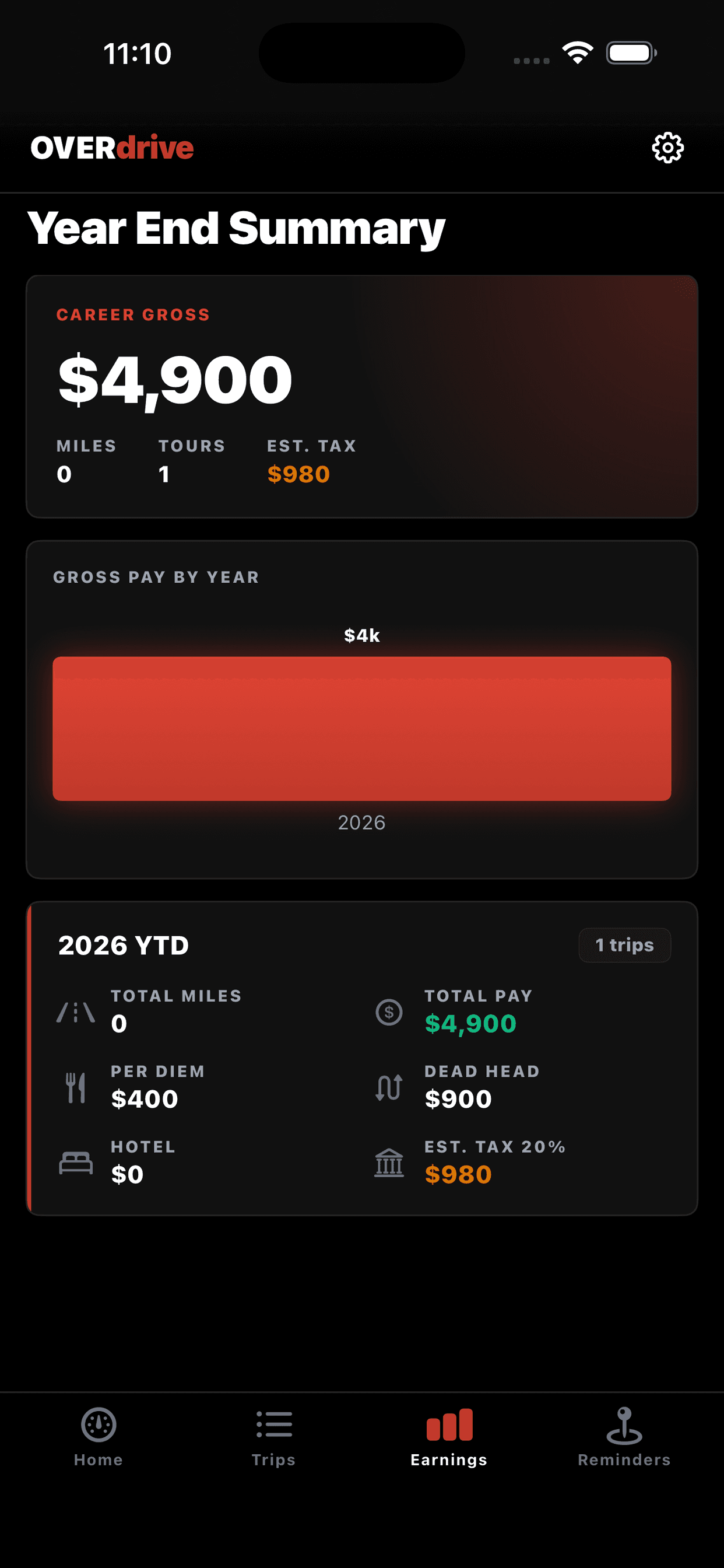
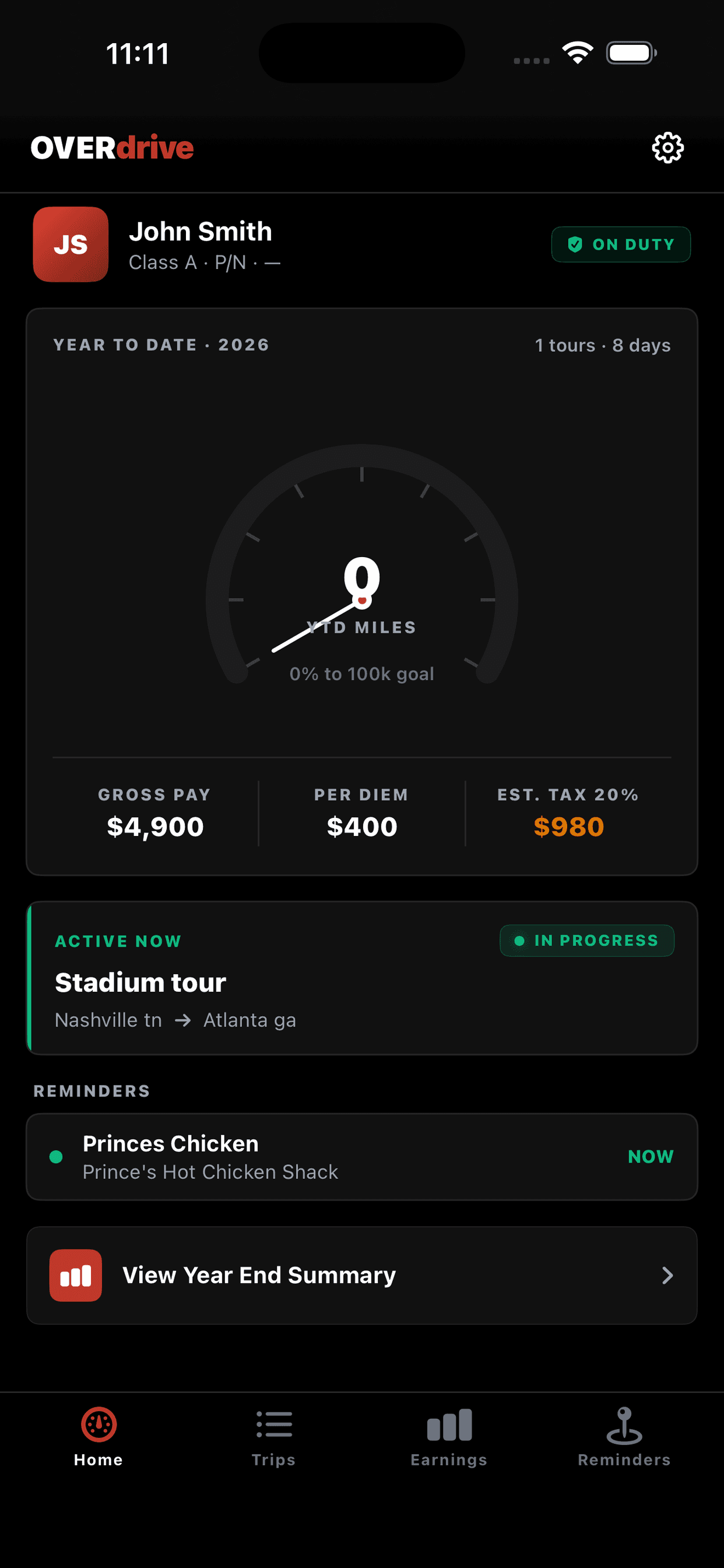
View All RulesA native iOS app for coach and tour bus drivers. It shows your trips, tracks your clock, and keeps you ahead of your Overdrives in one place, laid out the way drivers actually work.
Available now
OVERdrive Dispatch is live on the App Store. Download it free, log your first trip, and send feedback, because every report shapes the next build.
Free on iPhone, iOS 18.6 or later. Feedback goes straight to the developer.
Every major arena, amphitheater, stadium, theater and festival ground across the US and Canada. There is a GPX file for Garmin and OsmAnd, a KML for Google Maps and Google Earth on Android, and CSV and XLSX for the back office. Leave your email and the whole bundle comes to you.